
How Victory's Medicine's Advanced Regenerative Treatments Could Have Changed the First Thanksgiving
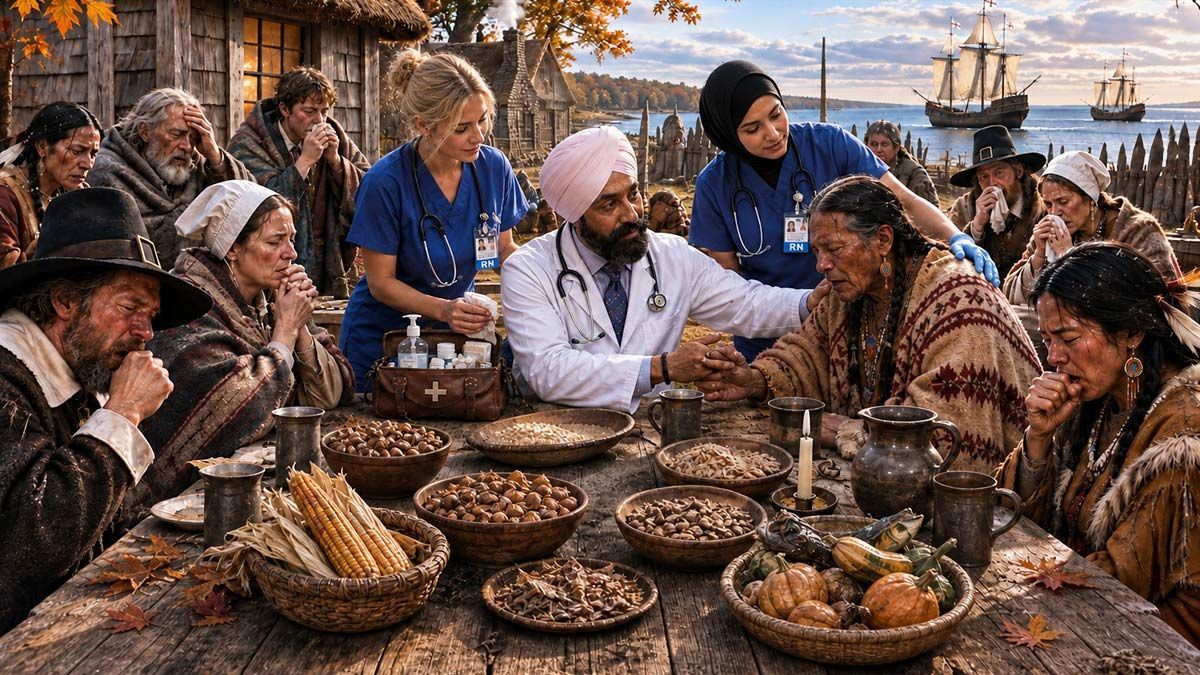
Every Thanksgiving, I'm reminded that one of our greatest advantages today is the ability to protect our health before a problem becomes serious. The Pilgrims and Native Americans who came together in 1621 faced disease, nutritional challenges, injuries, environmental exposures, and tremendous physical stress without the medical knowledge we have today. Modern medicine lets us identify many health risks earlier, understand what may be happening inside the body, and intervene before some problems progress. As a physician, I believe prevention may be one of the greatest gifts modern medicine has given us.
-Dr. Kamal Kalsi
The Health Challenges the Pilgrims and the Wampanoag Faced at the First Thanksgiving
Getting sick in the early 1600s was profoundly different from getting sick today. People lacked modern laboratory testing, diagnostic imaging, antibiotics, IV hydration, and today's understanding of infectious disease and the immune system. Physicians and healers had far fewer ways to determine what was happening inside the body, particularly during the early stages of an illness.
Daily survival could also work against good health. Food could be inconsistent, sanitation was limited, physical labor was demanding, and exposure to harsh weather could place additional stress on the body. An illness, nutritional problem, or injury that might be manageable today could become much more consequential when there were so few effective ways to diagnose and treat it.
Most importantly, there was little opportunity to practice prevention as we understand it today. People often had to respond once sickness or injury had already become apparent. They could not routinely identify metabolic abnormalities, investigate nutritional deficiencies, monitor many internal indicators of health, or recognize numerous risk factors before they produced noticeable symptoms. That is perhaps the greatest difference between their healthcare and ours. They frequently had to wait for a problem to reveal itself. Today, we can find problems earlier and take steps to protect our health before they become more serious.
How Dr. Kamal Kalsi and His Staff Could Have Helped the Pilgrams Overcome Malnutrition, Exhaustion, Exposure, and Physical Injury
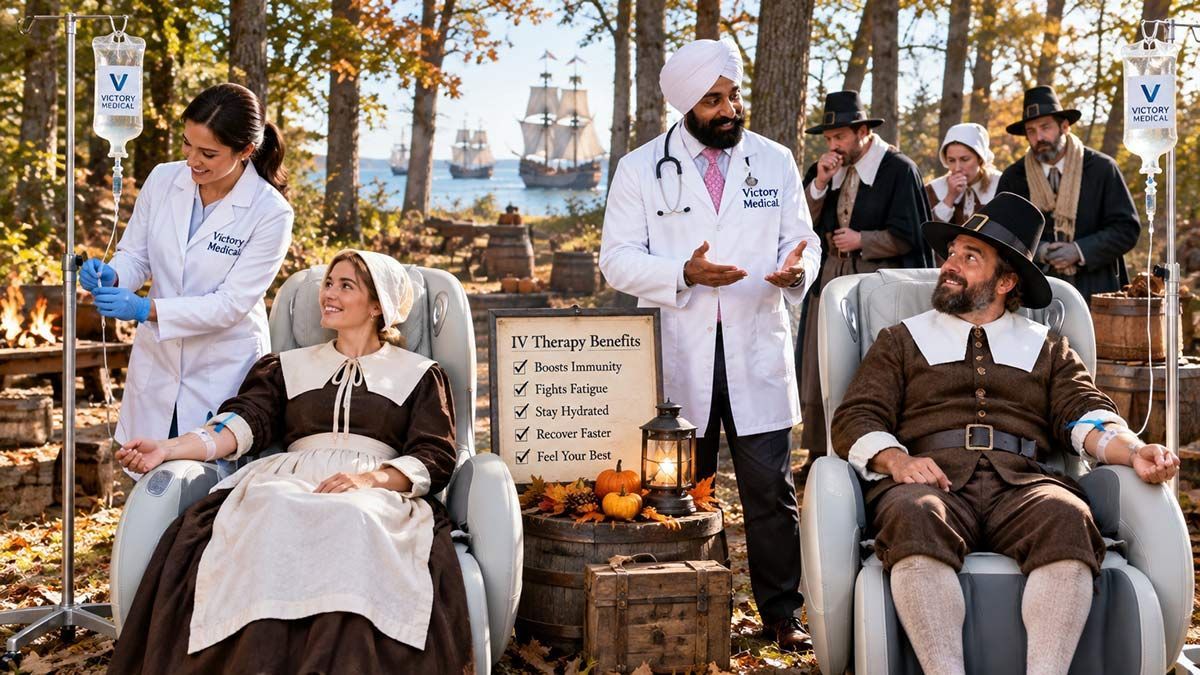
The Pilgrims crossed the Atlantic and entered an environment that immediately tested their physical resilience. Establishing a settlement required tremendous physical labor at a time when reliable food, comfortable shelter, and many basic protections we associate with good health were hard to maintain.
With Victory's medical resources, those health challenges could be approached very differently. Persistent exhaustion could be evaluated instead of automatically being accepted as a consequence of survival. Physicians could assess hydration and nutritional status, investigate weakness or unusual changes in energy, look for illness, examine injuries that were not healing properly, and determine whether other factors were compromising a person's ability to recover.
This is where prevention becomes so important. Victory's advanced treatments give us opportunities to investigate what the body is telling us before declining health significantly affects everyday life. Several of the modalities available today through Victory Medical Institute illustrate how different the medical experience could have been.
- IV Therapy: Hydration and adequate nutrition could have become serious concerns during periods of illness, food scarcity, and extreme physical exertion. Today, Victory's medically appropriate IV therapy can provide fluids and selected nutrients directly into the bloodstream as part of an individualized treatment program.
- Nutrition and Metabolic Health: For the Pilgrims, obtaining enough food was often more important than optimizing nutrition. Dr, Kalsi's modern medicine can assess nutrition, metabolism, body weight, hormones, lifestyle, and other factors that influence energy and long-term health, allowing intervention before some metabolic concerns become harder to manage.
- Orthobiologics and Regenerative Medicine: Physical labor was essential for survival, making joint, tendon, ligament, and other musculoskeletal injuries particularly consequential. Victory Medical's modern Orthobiologic and regenerative approaches give Dr. Kalsi additional options for certain musculoskeletal conditions and injuries.
- Osteopathic and Musculoskeletal Care: An injury that affected someone's ability to walk, build, farm, hunt, or perform other physical work could have serious consequences. Dr. Kelsi's advanced approaches to Osteopathic Manipulative Medicine can evaluate pain, movement, mobility, and physical function rather than simply expecting people to live with a problem.
- Environmental and Detoxification Support: Early colonial life involved environmental conditions that were very different from those most of us experience today. Victory Medical provides greater opportunities to investigate potential environmental exposures, consider whether they may be affecting health, and help patients reduce avoidable exposures when appropriate through advanced detoxification.
Even modern medicine could not have eliminated every danger the Pilgrims faced. It could have provided the ability to look for warning signs, identify certain problems sooner, and intervene before a manageable health concern became something much more serious.
How Victory Medical Could Helped the Wampanoag, Especially When Their Immune Systems Encountered Unfamiliar Disease
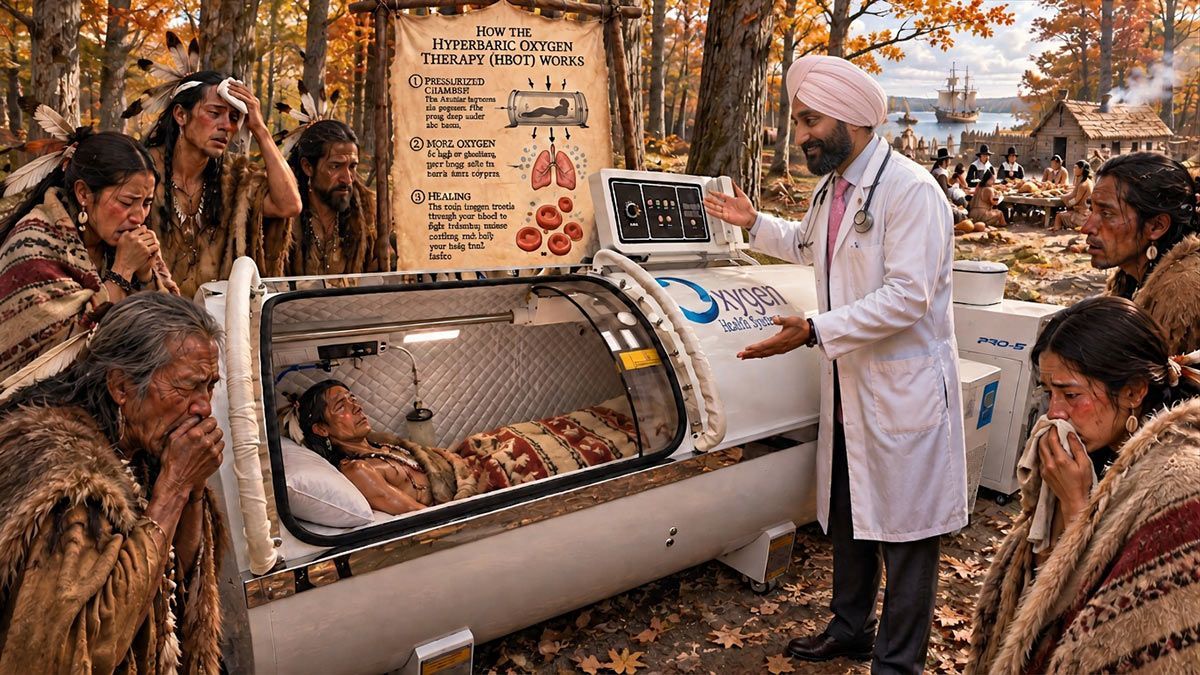
The Wampanoag Thanksgiving experience presents a very different lesson in prevention. Indigenous communities in parts of coastal New England had already suffered devastating epidemics before the Plymouth settlement was established. Continued European contact also exposed Native populations to infectious diseases that could present profound challenges when encountered by communities without the same previous history of exposure.
This becomes especially significant when we consider the immune system. The immune system is designed to recognize and respond to threats, but unfamiliar pathogens can pose a very different challenge than diseases already circulating within a population. It would have seemed like all the Wampanoag had severe immune deficiencies. Today, we understand far more about immune responses, disease transmission, infection prevention, and the importance of intervening before infectious disease spreads through a community.
Victory Medical's modern modalities lets us identify what someone's immune system is actually fighting. Laboratory testing, medical monitoring, infection control, hydration, nutritional support, and other forms of supportive care can all play roles in contemporary medicine. For Native populations confronting devastating epidemics centuries ago, simply having the ability to identify an illness and understand how it spread could have transformed the medical response. Several of Victory Medical's modern medical approaches illustrate just how different that experience could be today:
- Medical Evaluation and Diagnostic Testing: Identifying the cause of an illness can help physicians determine appropriate treatment and prevention strategies. It can also help separate symptoms that may appear similar but have completely different underlying causes. Once identified, the Wampanoag could have taken advantage of many of Victory Medical's advanced treatments.
- IV Hydration and Nutritional Support: Significant illness can affect hydration, nutrition, and a person's overall ability to recover. For appropriate patients, medically supervised IV therapy can provide fluids and selected nutrients as part of an individualized treatment plan.
- Nutritional and Metabolic Support: Immune health does not exist independently from the rest of the body. Nutrition, metabolic health, sleep, stress, and overall physical condition are all important considerations when physicians assess a person's health and ability to recover.
- Hyperbaric Oxygen Therapy: Hyperbaric oxygen therapy is a specialized modern treatment used for specific medical indications. While it is not a substitute for appropriate infectious disease treatment, it demonstrates how modern medicine can provide highly specialized therapies for appropriate patients and conditions that could never have been imagined in the 1600s.
- Personalized Medical Modalities: Victory Medical Institute offers a variety of medical modalities that can be considered according to an individual's condition, medical history, and treatment goals. Rather than assuming everyone needs the same therapy, modern medicine allows us to determine what may or may not be appropriate for a particular patient.
- Preventive Medical Care: Perhaps the most important modern advantage would have been prevention itself. Understanding exposure, recognizing symptoms earlier, supporting overall health, identifying illness, and taking measures to reduce transmission could have changed the way communities responded before disease became widespread.
The lesson from the Wampanoag experience is not that a single modern therapy could have prevented these historical epidemics. It is that knowledge of infectious disease, prevention, early identification, and appropriate treatment gives modern medicine tools that did not exist for people confronting unfamiliar diseases centuries ago.
With All The Pilgrams and Wampanoag Healed, What the First Thanksgiving Can Teach Us About Prevention Today
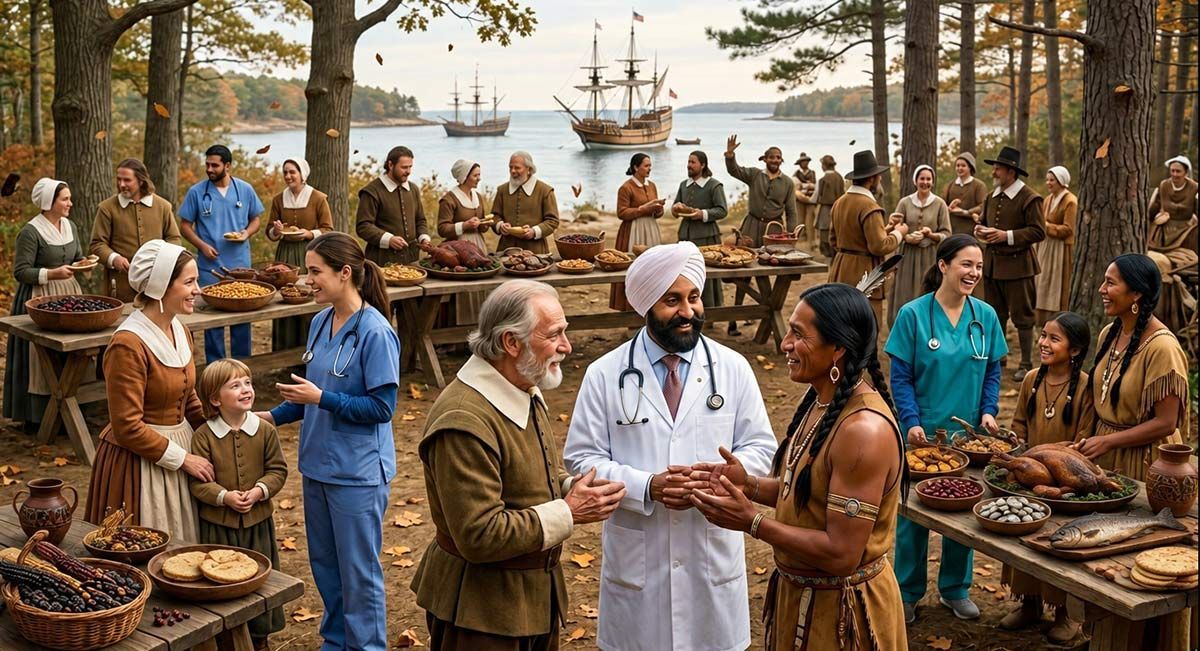
The health challenges faced by the Pilgrims and the Wampanoag may seem far removed from our lives today. Still, their experiences remind us how valuable it is to recognize a health problem before it becomes a crisis. They often had little choice but to wait until an illness, injury, or nutritional problem became obvious. Today, we can notice warning signs, investigate unexplained changes, identify certain risk factors, and take action much earlier.
That opportunity matters because many of us still wait. We may dismiss persistent fatigue because we're busy, ignore gradual weight gain until metabolic health becomes a concern, or keep living with recurring joint discomfort until movement becomes harder. We may notice changes in sleep, energy, recovery, or overall health and assume they're simply part of getting older rather than asking whether something deserves further evaluation.
Prevention encourages us to think differently. It means understanding our individual risk factors and paying attention to changes in nutrition, metabolism, physical function, immune health, environmental exposures, sleep, and recovery. It also means recognizing that maintaining health is an ongoing process, not something we begin thinking about only after we receive a diagnosis.
Preventive medicine does not mean undergoing every available test or treatment, nor can it guarantee that every disease or health problem can be avoided. It means learning enough about your health to make informed decisions, addressing appropriate risks when they can be addressed, and working with your physician before circumstances make those decisions for you.
The goal isn't to use every treatment available. The goal is to understand your health well enough to know when intervention may be appropriate and what you can do today to help protect your health tomorrow.
This Thanksgiving, Be Thankful for the Power of Prevention
The first Thanksgiving took place in a world where people knew very little about the internal processes that affected their health. They could not routinely identify pathogens, monitor many important health markers, evaluate metabolic changes, investigate nutritional deficiencies, or choose among the diagnostic, preventive, and therapeutic options available today.
We have those opportunities, and that is something worth being thankful for.
Modern medicine cannot guarantee perfect health or prevent every illness. What it can do is help us recognize certain risks earlier, ask better questions, investigate concerning changes, and make more informed decisions about nutrition, metabolic health, physical function, environmental exposures, recovery, and overall wellness. Prevention is ultimately about using that opportunity. Instead of waiting for your body to force you to pay attention, you can choose to start paying attention now.
Make Prevention Part of Your Health Plan
If you have noticed changes in your energy, weight, metabolism, mobility, recovery, or overall health, you don't have to wait until those concerns become more disruptive to start investigating them. And even if you feel well today, taking a proactive approach can help you better understand your health, your individual risk factors, and the areas that deserve attention as you move forward.
Schedule an appointment with Dr. Kamal Kalsi at Victory Medical Institute to discuss your current health, concerns, goals, and the preventive, diagnostic, or therapeutic approaches that may be appropriate for you. This Thanksgiving, don't just be thankful for modern medicine. Take advantage of the opportunity it gives you to take charge of your health.
Schedule your appointment with Dr. Kamal Kalsi and Victory Medical Institute today.